terça-feira, 9 de setembro de 2008

COMMUNITY OF CASAL DE CAMBRA-PORTUGAL

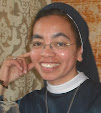
Sr. Angela Furian, SSpS
Sr. Iracema Casarotto, SSpS
Sr. Ma. Delia, SSpS

FEATURE: Medals of Merit for the SSpS community in Casal de Cambra, Portugal

by Sr. Maria Delia, SSpS and Sr. Ma. Mendes, SSpS

As a community, we strive to respond relevantly to mission demands through our direct involvement with the people. Primarily, as a witness to our being consecrated women missionaries, we live close to the people, facilitating their access to possibilities to make their lives better. We become the “voice of the voiceless” and the “bridge” between the poor and the public agencies that are responsible for assistance in health and medication, home feeding, documentation, social security, jobs and others.We try to gain knowledge of and give a deeper value for the different cultures and ways of life of the people, promoting their integration in the community. The concrete sign of growth in the community as a result of the Sisters’ ministry is the existence of the “Groups of Catechesis of Children and Youth.” The Viola’s Groups serve to initiate liturgies that reveal the new meaning they have for their lives- lives once left vulnerable to drugs and other dangers. This is a result of the good formation given to the Catechists and the youth. Their families also collaborated in information dissemination and fund-raising activities to build a Center of Socio-Pastoral Support beside a small chapel in the community. All these took place from 1996 to the present.
On June 29, 2008, we celebrated Holy Mass on the occasion of the Beatification of Bl. Josepha. On this same day, our community of Casal de Cambra, received the gold medal of merit from the Municipal Government of Sintra. At the same time, Sister Angela Furian also received the silver medal, given by the same municipality. These medals are clear testimonies of the relevant presence of the Sisters in the Municipal Urban District of Casal de Cambra.

We wish to share with the readers, not only this beautiful news but also the significance of our presence in this community.

The interview was done by Fr. António Leite, SVD, Rector of Provincial House of Lisbon Portugal.

What do these medals mean for the Missionary Sisters Servants of the Holy Spirit present in Casal de Cambra?
¨ We were surprised with this decision of the Municipality of Sintra. We never hoped to receive such recognition, but we see it as a sign of the credibility and the commitment of the Congregation to the families reallocated in this urbanization process. For us, it is an incentive always to be more available for this service, to be close to the needy and suffering through our missionary presence.We know that Sr. Angela was there at the start of your presence in Casal de Cambra.

When did you arrive to this place, and what made you take the challenge of being present in this urbanization process?¨
We started our mission here in the month of June 1996. Our coming was due to Fr. Valentim, SVD. We responded to the express desire of the Municipality of Sintra for the presence of a Religious Community in this urbanized area - integrating in the Special Program of Relocation (P.E.R.). Sr. Pompeya Martinez, who recently passed away, and I made the procedures for this foundation with the conviction that we were responding to the challenge that was part of our mission.Thus passed years and today, you, Sister, continue with the same characteristic smile.

Could you speak to us about how you “conquered the hearts” of so many people who share with you their daily joys and difficulties?¨
Sr. Pompeya, who began the realization of the project, stayed for some months. Then, other Sisters came - Hermelinda, Maria José and Maria de Lourdes. All of them did very good work. Being in contact with the families, they felt that the parents wanted primarily, catechetical classes for their children. We should note, however, that the Chapel of Santa Marta was only finished in July of 1999. Only then was space available for the activities of the Sisters. The daily Eucharistic celebration was also made possible for the people of this part of Casal de Cambra. All these activities helped in the integration of the two parties. The Sisters who came afterwards went to other areas. They came complete with needed skills for their apostolates. In this way, Sr. Maria Lourdes was able to form a Group called Viola. Today, this group, composed of other lay people, animates the Christian community's celebrations. With Sr. Delia’s arrival, a small group was formed called Catholic Labor Youth (JOC). The journey continues until today - in unhurried and patient service through my missionary presence and that of Sr. Iracema.

What challenges do you see today in the midst of the people?¨
Up to now, all of the activities with the children, adolescents, adults and elderly have been held in the small chapel and in the small sacristy. But we have good news! Starting in the month of September, the Municipality of Sintra will give us a space in one of the buildings. This will provide ample room to assist the groups and each person better. With this possibility, we hope to reach out to people who have not yet come.Lastly, the medals were received on the day that Mother Josepha, one of your co-foundresses, was beatified in Holland.

This year, we are also celebrating the Pauline Year. Do all these events have some connections?¨
When I was on the way to the awarding ceremony of these medals, I thought that at that same hour the Holy Door in the Basilica of St. Paul in Rome was being opened, as well as Mother Josepha's Beatification in Steyl (Holland), close to the house where our Congregation was born. At that precise moment, I felt a confirmation, a humble certainty, that God really wants us to be here in this place. In the light of St. Paul's example as the great announcer of Jesus Christ's Gospel, of the Centennial Year of St. Arnold and St. Joseph, and in joy and gratitude for Mother Josepha’s beatification, I can only utter this humble prayer: “Father, May Your Kingdom! Make us humble and docile instruments of your peace! Transform us with Your Spirit so that we can say, with St. Paul: It is not I who live but Christ who lives in me.” I live in the certainty that Love impels us.

sexta-feira, 1 de agosto de 2008

Timor Leste

Nacionalidade

Com a independência de Timor-Leste, em Maio de 2002, um grupo de trabalho do MNE estudou as questões de nacionalidade dos timorenses e entregou, em 2005, um relatório que sugere que têm direito a serem portugueses. O Governo mexeu na lei em 2006 e não resolveu nada
Os cidadãos de Timor-Leste são também portugueses e a maioria pode, se assim o entender, requisitar a dupla nacionalidade. O DN teve acesso a um memorando interno do Governo que concluiu que a independência daquele território em Maio de 2002 coloca problemas de atribuição da nacionalidade.Intitulado"Questões de Nacionalidade resultantes da Independência de Timor-Leste", este memorando com origem no Departamento de Assuntos Jurídicos do Ministério dos Negócios Estrangeiros (MNE) foi enviado a 27 de Abril para Diogo Freitas do Amaral, então ministro de Estado e dos Negócios Estrangeiros de José Sócrates. Esse documento era o resultado de pesquisas de um grupo de trabalho formado ainda no Governo de José Manuel Durão Barroso e que admitiu que "as vicissitudes pelas quais passou Timor-Leste desde 1975 - fim do domínio colonial português, ocupação indonésia, administração pelas Nações Unidas e independência - não afectaram o vínculo de cidadania existente entre uma parte significativa da sua população e o Estado português. À luz do direito português, continuarão a ser portugueses, enquanto o actual quadro legal se mantiver".E manteve. Um ano depois de enviado este relatório para Freitas do Amaral e para o ministro da Justiça, Alberto Costa, a Lei da Nacionalidade é alterada pela quarta vez (desde 1981) e nada muda quanto ao cerne da questão. A 17 de Abril de 2006, o Governo de Sócrates e o PS mexem na lei, mas no sentido de "alargar os direitos de aquisição da nacionalidade e não para os restringir", dizem fontes do executivo.Ao DN, um dos membros do grupo de trabalho, que integrou pessoas ligadas ao MNE e ao Ministério da Justiça, confessa que "não foi tomada nenhuma medida que resolvesse o que nós identificámos. Não sei se houve esquecimento ou desconhecimento, mas o que é certo é que a lei de 2006 não muda nada. Os descendentes de quem tenha tido nacionalidade portuguesa, em Timor, em Macau ou na Índia [Goa, Damão e Diu], podem reclamar esse direito".Segundo esta fonte, "a alteração legislativa nem seria a única opção. Em vez de uma solução unilateral, podíamos ter optado por um acordo bilateral que regulasse estas matérias". Celeste Correia, deputada do PS e uma das responsáveis pelo acompanhamento da lei de 2006 na Assembleia da República, lembra que "Portugal não reconheceu a anexação pela Indonésia e à medida que as pessoas iam nascendo eram portuguesas. Os filhos destes também". A deputada, que pertence à mesa da presidência da AR, reconhece que "ninguém [do MNE] nos chamou à atenção para a existência desse relatório". Mais, Celeste Correia estranha que ele tenha só transitado entre os dois ministérios e não tenha chegado ao conhecimento dos deputados que tinham em mãos a alteração da lei. Também esta deputada socialista defende que o assunto deve agora ser alvo de um acordo bilateral.No documento confidencial a que o DN teve acesso, os juristas do MNE dizem que "os timorenses nascidos em Timor-Leste antes de 1981 e todos os seus descendentes aí nascidos entre aquela data e a data da independência" são considerados portugueses. Mais, os timorenses nascidos em Timor-Leste "ou em qualquer outro país após a independência, filhos de pai português ou mãe portuguesa (igualmente timorenses) que declarem querer ser portugueses ou inscrevam o seu nascimento no registo civil português" podem também ser considerados cidadãos lusos.No relatório enviado a Freitas do Amaral - e que depois ficaria no gabinete de Luís Amado, que lhe sucedeu a 3 de Julho de 2006 - aquele departamento do MNE dizia explicitamente que "uma parte significativa da população timorense detém hoje, assim, nacionalidade portuguesa, tendo o nascimento de um novo Estado, em 20 de Maio de 2002, trazido como consequência que a quase tolidade do seu substrato humano seja detentor de dupla nacionalidade - a portuguesa e a timorense".Os especialistas do MNE faziam ainda referência a circunstâncias que complicam o caso, como "a destruição de grande parte dos arquivos dos registos de estado civil e paroquial", que se deu entre a ocupação indonésia e a independência, que "potencia situações de fraude". Consequências ou "riscos" como a "apatridia ou desconsideração da vontade individual na determinação do vínculo de cidadania" eram também destacados no relatório.Para fugir a este imbróglio, sugeriam-se duas vias: "a celebração de um acordo internacional entre Portugal e Timor-Leste ou a adopção de legislação interna por parte de Portugal". Nenhuma das opções foi tomada pelo Governo de Sócrates e, já na altura, o relatório dizia que "a manutenção do status quo é, a todos os títulos, de evitar". Porque "continuar a atribuir a nacionalidade portuguesa a um vasto universo de pessoas que com Portugal não têm qualquer ligação efectiva" acarreta "especiais responsabilidades internacionais" para o País. Neste momento, recorde-se, Timor-Leste tem uma população estimada em mais de um milhão e cem mil pessoas. O DN contactou ontem o MJ e o MNE, que apenas adiantou que o documento "não produz recomendações" e que é "um levantamento do status quo". Hoje mesmo, o presidente da Assembleia da República, Jaime Gama, recebe, o vice-primeiro ministro de Timor-Leste, José Luís Guterres. Isto enquanto o presidente de Timor-Leste, José Ramos-Horta, estará na Universidade do Minho, em Braga, a proferir uma conferência.
Fonte: http://dn.sapo.pt/2008/07/23/nacional/timorenses_beneficiam_lacuna_e_portu.html

segunda-feira, 14 de julho de 2008

A entrevista do P. António Leite, SVD a Ir. Ángela Furian, SSpS

Irmãs Missionárias Servas do Espírito Santo com medalha de ouro e de prata
Poderia ser um título relacionado com os jogos olímpicos ou com outras actividades desportivas. Mas não. Estamos, isso sim, perante o reconhecimento público de vidas que se vêm dando entre alegrias e dificuldades. De que se trata, então?
No dia 29 de Junho de 2008, as Missionárias Servas do Espírito Santo, da comunidade de Casal de Cambra, receberam a medalha de ouro de mérito municipal da Câmara Municipal de Sintra. Na mesma altura, a nossa bem conhecida Irmã Ângela Furin recebeu também a medalha de prata, atribuída pela mesma Câmara Municipal de Sintra, pelo considerado mérito municipal.
Os considerandos apresentados pela Câmara Municipal de Sintra são um testemunho claro dos méritos apresentados em relação à presença das Irmãs na Urbanização Municipal de Casal de Cambra. Como pretendíamos partilhar com os leitores, não somente esta bonita notícia, mas também ouvir um pouco do que significa esta presença, fomos ao encontro da Irmã Ângela e dialogamos com ela. Eis, então, algumas partes deste diálogo.

O que significam estas medalhas para as Missionárias Servas do Espírito Santo, presentes em Casal de Cambra?
Ficamos surpreendidas com esta decisão da Câmara Municipal de Sintra. Nunca esperamos receber tal reconhecimento, mas vemos como positivo que a Autarquia valorize o empenho da Congregação junto das famílias realojadas nesta urbanização. Para nós é um estímulo a darmo-nos sempre mais neste serviço, procurando estar próximas dos mais carenciados e sofridos, incarnando, assim, o nosso ser missionário.

Sabemos que a Irmã Ângela esteve ligada aos começos da vossa presença em Casal de Cambra. Quando chegaram a este lugar, e o que as levou realmente a assumir o desafio da presença nesta urbanização?
Começámos a nossa missão aqui no mês de Junho de 1996. A nossa chegada aconteceu através do P. Valentim, missionário do Verbo Divino. Desta maneira demos resposta a um desejo da Câmara Municipal de Sintra que consistia na presença de uma Comunidade Religiosa naquela que era a recém construída urbanização, integrando-se, deste modo, no Programa Especial de Realojamento (P.E.R.).
A Irmã Pompeya, de saudosa memória, e eu fizemos os trâmites para esta fundação com a convicção de que estávamos a responder a um desafio que fazia parte da nossa missão.

Passaram alguns anos e hoje a Irmã continua com o mesmo sorriso que a caracteriza. Poderia falar-nos de como foram conquistando os corações de tantas pessoas com as quais partilham diariamente alegrias e dificuldades?
A Irmã Pompeya, que entretanto começou a concretização do projecto, ficou durante alguns meses. Depois foram chegando outras irmãs: Hermelinda, Maria José e a Maria de Lourdes. Todas elas fizeram um trabalho muito bom. No contacto com as famílias, sentiram que os pais desejavam, em primeiro lugar, a catequese para os seus filhos. Devemos notar, contudo, que somente em Julho de 1999 foi concluída a Ermida de Santa Marta, que está situada ao lado dos prédios. Desta maneira estava conseguido algum espaço para as actividades das Irmãs, possibilitando também a Eucaristia diária para as pessoas desta parte de Casal de Cambra. Tudo isto ajudou à integração das duas partes.
As Irmãs que foram chegando – outras, entretanto, foram para outros lados – integraram-se nas dinâmicas que se foram construindo. Foi neste caminhar que se formou o chamado grupo de viola da Irmã Lourdes. Hoje, este grupo, já com outra gente, entre outras coisas, anima as celebrações da comunidade cristã.
Com a chegada da irmã Delia formou-se um pequeno grupo da Juventude Operária Católica (JOC). O caminho continua a fazer-se hoje num serviço lento e paciente de proximidade, com a minha presença e da Irmã Iracema.

Que desafios sente hoje no meio de toda esta gente?
Até agora todas as actividades com crianças, adolescentes, adultos, idosos… têm sido realizadas na Ermida e na pequena sacristia. Mas temos uma boa notícia: a partir do mês de Setembro a Câmara Municipal de Sintra vai ceder um espaço num rés do chão de um dos prédios. Desta maneira vai ser possível atender melhor os grupos e cada pessoa individualmente. Contando com este espaço de características diversas, temos a esperança em chegar a pessoas que até agora não teremos conseguido.

Uma última palavra: as medalhas foram recebidas no dia em que, na Holanda, era beatificada a Irmã Josefa, uma das Irmãs que esteve nas origens da Congregação. E estamos também com o Ano Paulino a dar os primeiros gemidos. Encontra alguma relação entre todos estes acontecimentos?
Quando me encontrava no caminho para o acto da entrega das medalhas, pensava que naquela mesma hora estava a acontecer a abertura da Porta Santa na Basílica de São Paulo em Roma, assim como a beatificação da Madre Josefa em Steyl (Holanda), perto da casa onde nasceu a Congregação das Missionárias Servas do Espírito Santo. Naquela altura senti como uma confirmação, uma humilde certeza, que Deus nos quer realmente neste lugar. À luz do exemplo de S. Paulo como o grande anunciador do Evangelho de Jesus Cristo, do Centenário da morte dos Santos Arnaldo e José, na alegria e gratidão da beatificação de Madre Josefa, posso tão somente balbuciar esta humilde prece: “Pai, venha a nós o Vosso Reino! Fazei de nós instrumentos humildes e dóceis de Vossa paz! Transformai-nos com o Vosso Espírito para que possamos dizer, com São Paulo: não sou eu que vivo, é Cristo que vive em mim”.
E viver na certeza de que o Amor nos impele.

P. António Leite, svd

domingo, 29 de junho de 2008

Mendengar dari pihak pemerintah


Terima Kasih Tuhan

Sr. Angela berumur 77 tahun, berasal dari Austria dan sudah menjadi warga Negara Brasil.
Berkarya di Brasil 26 tahun, di Roma 6 tahun dan sejak tahun 1989 mulai di Portugal.

Penghargaan kepada SSpS di Portugal


Medal emas kepdada kongregasi dan prata kepada Sr. Angela Furian.

Saat berahmat


Sr. Angela Furian bersalamatan dengan pemerintah setempat sesudah menerima medal

Ir. Angela Furian, SSpS


Hari ini di Belanda merayakan hari beatifikasi dari Madre Josefa, dan itu adalah suatu kegembiraan bagi kami suster suster Abdi Roh Kudus yang berkarya di seluruh dunia, namun mulai dari hari ini Madre Josefa adalah milik Gereja sejagat.
Di Portugal, dari pemerintah Lokal setempat memberi penghargaan kepada para suster dua medal antara lain;
Medal pertama adalah prata yang memberikannya kepada privadi Sr. Angela, medal yang kedua adalah emas/ouro yang memberikan kepada kongregasi SSpS yang berkarya di Portugal.
Sr. Angela dari Austria, dan 26 tahun berkarya di Brasil, 6 tahun sebagai Muther rumah di Roma generalato, dan sejak tahun 1989 mulai di Portugal.
Kerja dengan orang orang kecil yang dikucilkan dari sociedade setempat.
Hari ini adalah hari yang patut di syukuri atas rahmaat dan kesetian Tuhan dalam hidup dan karya SSpS.
Salam buatmu semua.

quinta-feira, 17 de abril de 2008

SVD of Slovak Province


Fr.Pavel Kobliha, SVD, JPIC Coordinator

For many centuries the area of today’s Slovak Republic was centre of interests of many nations. Romans, Germans, Turks and Hungarians. All of them wanted to conquer the territory between the Danube and High Tatras and settle there. But none of them were able to subjugate Slavs and stay here forever. But right because of these interests Slovakia is influenced by many nations now and they take part in Slovak citizenship. The biggest minority group, with about 10% of inhabitants, is Hungarian minority. They inhabit mostly the southern part of Slovakia, along the boarder with Hungary. The fact is that they have their own political party, which is widely supported also by non-Hungarians, and has its place in coalition. However, in real life, there are different relations between Hungarian and non-Hungarian people. In minds of Slovaks is deeply engraved, that we had to live under pressure of Hungarian reign for many years. And so people behave. Though, when one gets any closer contact with them, he realizes that they are like other normal people. What a surprise!
Ethnic groups:With our EU entrance is joined the discussion about some racial problems with gipsy ethnic group. Actual problem is illegal interruptions of young gipsy girls. However is the truth, everybody knows how these people live, in what conditions. We know it, and people from abroad know it as well. But they believe this is because of big discrimination and generally bad social conditions for ethnic groups in Slovakia. I think, maybe as most Slovaks that they caused it themselves. They have this way of life simply in their blood. So, the fact is that every employer rather employs a guy with a good social hinterland, and whom he can trust. So then the bigger half of gypsies does not have any job. It means no nice income, what reflects in bad home and social hinterland. This is a very simple view, but we can call it vicious circle. Anyway, there live many other minorities in Slovakia. For example Czechs, Germans, many other Slavs tribes, like Croatians, Slovenians, Russians, Ukraine’s, and polish people and so on. The newest minority which is rising are people from East Asia. We can see “Chinese” shops on every corner.

Racism is not widespread in Slovakia. The fact is that over centuries, the inhabitants lived an isolated existence and were not used to meet people of other races, except for Roma (Gypsies). Slovakia has never had colonies so that people from Africa and other continents apart from Europe were practically never seen here until well into the 20th century. Their lifestyles and social institutions, including slavery, were totally unknown to people here.
The Roma people (as Slovak Gypsies prefer to be called), form a relatively important minority group in Slovakia. Their problem is a very high unemployment rate, reaching 100% in some settlements. This is the main cause of their low living standards, which in turn bring about high crime rate and misuse of social resources. As a result a gulf developed between them and the majority population. However, racist physical attacks are few and far between.
The number of foreigners of different skin coloring increased during the past years mostly due to students from African and Asian countries. Many of them have learned the Slovak language, married local people and happily raising families. They have very nicely integrated into the society.
When shopping in open-air markets, you will see many vendors of bargain-price Asian clothes and electronics. almost exclusively they have some from Vietnam. They can speak little more than a few phrases in Slovak, other than the prices of their goods, but many people like to do business with them, because their goods are cheaper than similar articles in regular shops.

The Vatican championed the rights of gypsies, admitting its own past prejudices and calling on governments to improve the shunned nomads' lot. Presenting a new document on gypsies, Cardinal Stephen Fumio Hamao said while they had a right to their identity as a traveling people, they frequently met with "indifference or opposition“.
The report - Guidelines for the Pastoral Care of Gypsies - said gypsies were a people "abandoned by men but not by God" and outlined the "special pastoral approach" that the Catholic Church intended to adopt to help them
Key objectives were education and professional training for the population, as well as equal rights for men and women, it said .
"Of course they, too, have duties" towards the society in which they live, Cardinal Fumio Hamao said.
In this connection, the guidelines referred to the need to encourage "honesty and righteousness" in those who lived on the fringes of the law, helping them to abandon drug trafficking, theft and other routes to "easy money“.

War and terrorism in Slovakia /Muslim threats?

So far, touch wood, there were no terrorist attacks in Slovakia. Because Slovakia is a very small player on the international scene and there are no cities with over half a million inhabitants, the risk is not as high as in some other countries and cities. (For instance: the Czech Republic). Nevertheless the threat of terrorism is taken seriously and all necessary preventive measures are in place.

Social Ministry with the drug and alcohol addicted:

Following the rehab program, it is used to restore the former addict's ability to focus on real life goals and to return a level of self-control to the individual. This greatly improves the former addicts' ability to face the realities of life and reduce the need for drugs to escape the difficulties of life. Often, an addict commits harmful acts, both to themselves and their loved ones that traps them into further drug use.

Our “Novy Svet” rehab campus, in which Br. Maros Butala, (svd supervisor) works, is a comfortable house aimed at healing and appropriate for all ages. The addicts are treated with respect and are allowed to be themselves. Fr.Pavel is a spiritual director of these addicts. Br.Maros is a supervisor and Mr. Ladislav Nemeth is in charge of all rehabilitation centre. Of course there is a whole team of people working with them. A group of at least two people are necessary to provide the weight to break through the denial of the addicted person. An especially effective member of the confronting group is the employer or supervisor.


SSpS Slovak Province


Sr. Yuvensia Daso, SSpS
In the last few years the SSpS in Slovakia have started and are developing some new projects.

1. Working with the Roma Children (Gypsies)

We are developing our apostolate among the Roma people who make up approximately 5 % of Slovak population. One of the groups most affected by the current social and economic situation is the Roma minority. This group has the highest unemployment and the least chance of finding a job, along with low level of education and nearly no possibilities for re- qualification. Roma people are one of our priorities. Our Sisters work with Roma people esp. children in almost all of communities in Slovakia and in the Czech Republic. We started a special project with Roma‘s children in Nitra - Orechov Dvor.

In year 2005 we were asked by the vice mayor of Nitra to start apostolate with people who were not able to pay the rent for their houses and ended on the street. The vice mayor of Nitra wanted to help them and so they built for them outside the city 2nd class flats in Orechov Dvor. They saw that the people esp. their children need help and that they need somebody who has time for them. At that time an international junior sisters group who prepared themselves for final vows in Ivanka pri Nitre was asked by the PLT to start this apostolate. In Orechov Dvor live presently 250 people. Our sisters offer their help to those children by helping them with their homework, by playing and singing with them, drawing, painting and so on. The Tertians visited the children in 2005 once a week but since 2 years Sr. Pia Michalicova and Sr. Katerzyna Niezgoda go every day from 1 .pm to 5 .pm to them. Bishop Viliam Judak of Nitra is ready to help us and came already few times to visit the place. Since the beginning of this year one Salvatorian-Father comes twice a week to give the catechesis and prepare the people to receive sacraments. Most of the Roma people are Catholics and are proud to be Catholics. They love Mary very much and take refuge to her. Since 2 months also the students from the University of Nitra come twice a week to work together with our sisters. The main problem is the isolation of the people in this place and a very poor infrastructure Our Sisters share one room with the Kindergarten which uses it in the morning and they use it in the afternoon. We initiated the project to get there portable structures in which the people can meet and which can serve as social centre. The city of Nitra got already the structure and they should be put there this year. We feel that our apostolate with Roma people is a real priority here and now. In our last Provincial chapter in November 2007 we discussed this issue at length and decided to collaborate in this apostolate with the Roma Cathedra of the University in Nitra. In the meantime we prepared the contract about the collaboration between the City Nitra, the University of Nitra and our Congregation. The contract will be signed this year. It is not easy to carry out this ministry but we are glad that we are doing it. We try to introduce to these children spiritual values, which can bring them much more happiness than merely physical pleasures. They can see and experience that God is able to bring them many good things and they can put their trust in God.

2. Working with women.

Working with women and for women has been practiced by the community of the provincial house for more than 10 years in Women prison in Nitra. The sisters go there every Sunday for visiting, preparing the Holy Mass, and teaching catechism. They do this ministry in collaboration with the prison chaplain. In February this year at the meeting with Bishop R8bek, the prison chaplain and the directress of the prison we evaluated this apostolate. We saw the need to have more time for catechesis. We see also very important the collaboration not only with the prison chaplain but also with the psychologist of that place. The prison in Nitra is the only one women prison in Slovakia.
The Novitiate in Nitra assists to abandoned mothers with their children in collaboration with the city Nitra.
In the Czech Republic our sisters work with abandoned women in the Christian charity. Women who are there are mostly refugees. They openly share their life experiences with the sisters. Our sisters also look after their children when their mothers go to work.
One of our sisters works together with an MSC father and psychologist, helping sexually abused women.
Another sister works with AA in Pereš nearby Nitra and the community in Ivanka pri Nitre is ready to welcome those people so that they can share their experiences about the change in their lives.
We are happy that since 10 years also these areas remain not only not taboo but the needed help can be given to the people.

3. Mass Media

In this field we try to keep alive our history esp. from the communist time. Sr. Ivica Kúšiková is presently working on a project called Witnesses of Faith in which religious women from different congregations are telling stories from the communist regime. We feel responsible to pass on the truth to the next generations. A documentary film with that topic was made about the Slovakian province two years ago.

These are the main areas in which we are developing our social and cultural and spiritual work as a part of our JPIC program. There are many other smaller fields in which we work in the frame of JPIC.

JPIC-MISSION IN THE NEB-PROVINCE

Toon van Bijnen svd

Organisation
Because there are many new coordinators among us, I like to present you a little bit the organisation of our JPIC working.
Since 1986 we have not only a JPIC-coordinator but a commission of 6 members, belonging to different communities so that all confreres are presented. There has been a strong continuity in this commission. Three of the actual six members are from the very beginning up to now full members and even coordinator. The commission is very well rooted in the provincial structures, because three of us are members of the provincial council. This has been all the 22 years so. So we enjoy the full support of the provincial authorities and a sufficient budget. Sometimes the provincial is attending a meeting. The commission is advising from time to time the provincial council.
We are meeting 7 or 8 times a year, in different communities so that all confreres are aware of our apostolate. Once a year there is a joint meeting with the SSpS-commission in a SVD or SSpS-community. The agenda is made up by the coordinator and sent to the members. All members are in turn making the report, which is sent to all our members, to the provincial and to the SSpS members of their commission. A summary in English is made for VIVAT International, the general coordinator, the Euro zone coordinator and everyone who wants to receive it. Maybe we will send it also to the members of the VIVAT International-antennas in Belgium and the Netherlands. But up to now these antennas are not yet functioning. Included in an internal news bulletin, that is distributed every two months among the Dutch and Belgian confreres, we provide always a JPIC bulletin with information about campaigns and situations; three items in each edition.

Actions of the commission
The actions of the commission are mostly dealing with lobbying; so working for structural change.
Most of our actions are undertaken in co-operation with other NGO's so as VIVAT International, Oxfam, Pax Christi, AEFJN, Lenten campaign, Jubilee 2000, Amnesty International. The last three years we have been campaigning for:
1. Fair trade. We signed petitions to EU commissioner Peter Mandelson, Heads of State, Prime Ministers, defending the rights of the poor countries in the WTO conference of Hong Kong. Several times petitions to de EU authorities, demanding to change the proposed new EPA's at January 1, 2008.
2. Every year we signed petitions to the Heads of State of the G8 for cancelling the foreign debt of the poor countries For this question our members have a subscription to the magazine Jubilee Nederland, what is regularly discussed in our meetings One of our members prepared a detailed study for the AEFJN 3 We pay a special attention to the EU policy for Africa. There were several protests against the unfair trade by dumping Belgian class-books as a “gift” to Congo; dumping medicines to African countries, and most of all against the protection of European agro products and the free export to African countries.
4. More than 2 years we have been dealing with the water provision in African countries. We campaigned against privatisation of water by big companies. One commission-member was co-editor of a detailed study about people’s right to water.
5. Another member is in the AEJPN responsible for food-sovereignty of the African people. The commission signed petitions for this right.
6. In our Peace Apostolate we participated in the campaign Control Arms and several times we signed petitions against the trade in small arms and against the system of child-soldiers; against the new Japanese army (changing article 9 of the Constitution). Every year the International Peace-day and the Peace-day of the religious and the Peace-weeks in the Netherlands and in Belgium are celebrated. We are actively cooperating.

7. Over the years the commission is dealing with alternative banking. On the proposal of the commission the province co-finances a small banking project in the Philippines.
8. Belgium and the Netherlands are among the most "multinationalised" countries in the world. Amsterdam is the number one in the world with the most nationalities, Antwerp is the number second. This is for our commission the main challenge: building a peaceful multinational, multicultural and multi-religious society. One community is living in the most multicultural and multi-religious area of the town. Others are working in parishes where there are over 90 nationalities.
One of us has been halftime working for refugees, providing lodging and legal assistance; others are doing so regularly.
We are taking part in campaigning for asylum-seekers. We have signed petitions against the detention of children in refugee camps. We take regularly part in vigils of asylum-seekers. In the Netherlands we signed petitions to the government demanding a “general pardon” for people without legal documents, who are over 5 years in our country. Every year we are present at the vigil in memory of 11 asylum-seekers who died by fire in a detention camp. Regularly there are manifestations against racism, where we are present. In short, we are campaigning against every restriction of migration.
For the cohabitation with other religions one community is organising multi-religious meetings in our house, where Muslims, Hindus, Sikhs and Christians are invited. Also a multi-religious Christmas party was held in our house. We are taking part in iftars and the end of Ramadan-celebrations and joint prayer services and workshops on this matter. One of us is working in a diocesan commission to promote harmony among religions, by preparing the liturgy for the 7 Sundays between Eastern and Pentecost, (which give a good opportunity to open up the minds for other people), by organising conferences with a imam, a rabbi and a catholic priest, by writing a booklet about the meaning of Abraham for Jews, Christians and Muslims, by publishing about multi-religious conferences and documents. Another confrere is giving instructions to migrant imams for their integration in the European situation. Some have regular contact with Muslim leaders.

Actions of all confreres
2 or 3 times a year the commission invites all confreres for prayers and for petitions. We see it as our duty to animate all SVDs in our province. The coordinator is sending an appeal to the rectors of the communities. The response is very good; about 90%, we may say. So, every year there are prayer services and celebrations in every community at World Peace-day: also at World Aids day ad some others. Actions as "stand up against poverty" and "1 minute put out the lights" are well done in the communities.
The last years the confreres signed petitions to the Top G7/8 for cancelling if the foreign debt of the poor countries; They signed petitions to Ministers and Commissioners in order to change the WTO-policy and the EPAs There were petitions, addressed to the Minister of Agriculture, to change the Africa-policy: a petition addressed to the Minister of Home Affaires, protesting against the detention of children in refugee camps; a petition for the regularisation of illegal migrants without documents. For these problems prayers are said during Eucharist and prayer services.
So we are happy about this good response. Sometimes it happens that a confrere does not agree with the commission. But we are happy about his attention for world problems and we give him a proper answer. We think, that the JPIC commission in our province is well accepted by all SVDs. In the annual report of the province the coordinator is invited to write his survey over the last year. Finally the coordinator is as observer admitted to the provincial chapter, where he is presenting his report and proposals, which can be discussed. So, JPIC is well integrated in the NEB province.

SVD of Province Austria

There is a team of three confreres involved in JPIC issues:


Fr. Oskar Becker, Br. Franz Eichhorn, Fr. Patrick Kofi Kodom

The dialogue with Muslims was formerly done by Fr. Markus Solo.

Other main fields are:

Migration issues

Refugees, prisoners, asylum seekers, deportees

Statement of concern from our communication and media

Regular meetings with the SSpS

Ecological concerns e.g. St. Gabriel is heated mainly by solar power.

Seminars and talks

Fr. Patrick is especially involved in the ministry of refugees and deportees. Many asylum seekers end up in deportation camps waiting to be send back to their home countries. The regulations in the EU are getting tougher and to work with and for these people seems to be a bit dangerous sometimes.

Patrick Kofi Kodom, SVD

English/Irish Region SSpS

Sr. Sujata Sawarimuthu, SSpS

R 8
English/Irish Region SSpS

The Sisters in England and Ireland are very much involved in justice and peace issues in and outside of their communities

WOMEN'S PEACE GROUP: We have joined the Birmingham Women's peace group. It is a group of women from all faith backgrounds, who have been meeting regularly for the past 15 years, listening to one another's stories, sharing common concerns and discussing issues of peace and justice in our world. They represent all faiths, races and ethnic backgrounds, all age groups and come from a wide variety of social positions. We try to put aside our differences in the common quest for peace and explore practical ways of giving expression to our feelings of compassion for those in need.

Few examples will be given

DROP-THE -DEBT-FAST: A 36 day rolling fast will demand debt cancellation for 36 poor countries. The fast will begin as the World bank and International Monetary Fund hold their Spring meeting from 12th April and end on Sunday, 18th May when we mark the 10th anniversary of the Birmingham G8 Human Chain. Each day we will focus on one country that urgently needs the chains of unpayable and unjust debts to be broken.

We will join the fast for a day or more in our areas and the rest of the actions will be explained.

IMMIGRANTS AND ASYLUM SEEKERS: Some of us are involved working with Asylum seekers and of their concerns. We had few failed Asylum seekers living under our roof until their cases were heard once again and have become the part of UK refugee status. Our main work with refugees is to teach them English, help them with their paper work and to be a moral support whenever and wherever is possible.

Few examples will be given.

MEDAILLE TRUST: It is a charity founded by Catholic nuns, brothers and priests with the aim of helping women, young men and children who have been freed from sex-trafficking and their empowerment, enabling them to regain their sense of dignity and self worth. This is done by providing safe housing and offering opportunities for physical and psychological healing and rehabilitation.

Please read "my story" from this magazine. More explanations will be given later.

SSpS Province of Austria

Sr. Felixine Kofler SSpS

JUSTICE, PEACE AND PRESERVATION OF CREATION
Report for the European-Assembly in Nitra 2008

1) Themes of self-awareness carried out in a concrete way:
· Trafficking women in Austria and Europe (Angelika Kartusch)
· A series of reports about Islam (P. Dr. Markus Solo)
· Workshop on Reconciliation in every day life Dr. Pete Hämmerle)
· Persevering development (Dr. A. Strigl)
· Forming Creation and Preservation - a Contradiction? (Dr. W. Stark)
To all these meetings were invited our sisters and people from the parishes.
· Workshops "Christian Hospital" for the leading members of the staff by Dr. P. Zulehner.
· Seminars: to get off drugs, alcohol, smoking
· Evaluation-Day "Coping with conflict and stress-situations"

2) Participation in Signing Actions (CSI, AI), yearly March of Demonstration in Silence for the persecuted Christians; candle of Hope
3) Supporting GFS-magazines: "Ost-Westwind", "Pax-Christi", "Unser Projekt", „Missio"
4) Fair trade: EZA and Bio products from small shops in the surrounding area
5) Some community have their own bio garden
6) Cooperation with Local Authorities in cleaning promenades of the river banks.
7) Donations for Projects producing lasting energies (wind, sun, foto voltaik)
8) Very important is the direct contact to people in need: cooking and distributing soup
to the homeless; one sister gives medical help; counselling of people (Oase); Hospiz; Caritas work in the parish; commitment regarding threatened unborn life - accompanying traumatized women; women in crises and language-students can live with us for a
limited time; eg. 4 Sisters from Zambia stayed with our Vienna-Community a few months A new challenge is our own school with ever more children from different cultures and Churches.
Hospital-projects: "Village of Peace". "International Alliance for children", sick, handi­capped children from war-torn countries get medical help and care. Our senior-nurses give special attention to patients before and after operation. Club-food-project in Mali/West Africa. The same Orthopedic Hospital releases doctors 3­4 times a year for this mission. Pro iect "Donationsbox" for HIV/AIDS. Project "Family-friendly-Hospital" to make life easier for nurses with a family.
9) Attitudes
Mediation of peace; simple life style; second hand-clothing; getting together with neighbours and owners.
Careful and gentle way with the gifts of the creation and gratefulness for the beauty of The nature. Trips with public traffic whenever possible.
10) Celebration - Prayer: Day of Creation and "Erntedankfest". Prayer-Hotline:
We notice a growing interest for GFS. Yet our co-responsibility of the consumer-goods of our Western World - as we are part of it - is in need of improvement.

As women following Jesus, we are happy to give our power and voice to the poor who challenge us and enrich us with their gifts.

Sr. Felixine Kofler SSpS


SVD of Irish & British Province (IBP)?

Fr. Finbarr Tracey, SVD

1. What are the JPIC ministries in the Irish & British Province (IBP)?
a) Migrant and Refugee ministries. There are now 10 confreres working in with migrants and asylum seekers, eight on a full-time basis and two on part time basis. There are three serving the Polish Migrants in three different dioceses in Ireland, one serving the Migrants from Brazil in a fourth diocese, and another serving the Filipino Migrants in the Diocese of Bristol in England. One confrere in the Archdiocese of Dublin is working with Asylum Seekers and Refugees under the auspices of the Jesuits. Part-time work is carried out for the Slovak, Filipino and Brazilian Migrants in Dublin.

b) Justice and Peace Issues and Media
- with reference to poverty, religious and cultural differences, anti-racism, etc. JPIC is working with Kairos Communications on TV programmes which focus on these issues.

c) Advocacy covering a range of issues through special committees. This work is carried out in conjunction with the Conference of Religious in Ireland (CORI) cf. www.cori.ie/justice and the Irish Missionary Union (IMU).


2. What groups do you work with collaboratively?

a) Ten of our members are working in the migrant ministry in collaboration with parishes and various
dioceses.
b) We have one confrere working closely with the Jesuits in the area of refugees and asylum seekers.
c) Our work in the media is in collaboration with Kairos Communications, an SVD media ministry.
d) The JPIC coordinator works with the Conference of Religious in Ireland (CORI) and the Justice
Commission on a range of issues related to a more equitable economy. The CORI Justice Commission has a g
good deal of influence in its social partnership role with the Government and works on a variety of issues
related to poverty and migration, housing, health and education.
e) The World Magazine also publishes JPIC articles. RESPONDING TO CONFLICT (RTC)
f) The Mission Secretary works closely with the Irish Missionary Union (IMU) and the Irish Missionary
Resource Service (IMRS) in providing funds for overseas development projects.
AEFJN, ISE, RTC. IRISH SCHOOL OF ECONOMICS (ISE), FRONT LINE FOR HUMAN RIGHTS DEFENDERS


3. How do you perceive your role as JPIC coordinator? Do you think it is important? Is JPIC dimension and ministry considered important by your province?

The role of the JPIC Coordinator is most essential in setting the agenda for such a ministry. A lot will depend on the coordinator in relation to the direction the province will take on these issues. He can set new agenda, (which may call for research), link with Vivat International, help to coordinate the various projects within the province and in general raise the profile of JPIC among the confreres.

Traditionally the SVD in Ireland have not understood JPIC work to be an important part of its ministry. With the influx of migrants from different parts of the world it has increased in significance and the IBP was among the first to respond to the needs of migrants. The SVD always recognized the work of development agencies like Trocaire, Concern, GOAL, etc. But global issues related to sustainable development, the environment, human rights etc demand a new commitment from missionary orders.


4. Have you/do you work with VIVAT International? How might VIVAT better serve your needs as a JPIC coordinator?

I am presently linking up with Vivat International for research work with a two-fold purpose, a) academic; and b) in relation to how best to promote a greater degree of solidarity in our work, particularly in reaching a consensus about SVD priorities and goals.


7. Expectations from the generalate JPIC coordinator?

I would like the JPIC coordinator to build a consensus among the provinces in regard to how we might best respond to present global issues in development. The history of our society’s involvement in JPIC and how it sees itself in relation to the Social Teachings of the Church, the practical way in which we engage with issues of faith and justice, all require a new impetus.


Finbarr Tracey, SVD

ITA SVD PROVINCE

Fr. Paulino, SVD

ITA SVD PROVINCE (1947-1965): The ITALIAN Province was established in 1965 as a separate unit from Switzerland. Now it extends over three countries: Northern Italy, Romania and Moldova with four principal languages: Italian, German, Romanian and Russian. The four SVD houses in Northern Italy (Vicenza, Varone, Bolzano, and Oies) are part of the province: the communities in Rome and Nemi are under the direct administration of the Generalate.

JPIC REPORT (as of April 02, 2008)
Specific JPIC animation of the entire SVD Province was not done much in the last five years. However, wherever we work we seek to promote: justice, peace and the integrity of creation, giving special attention to the poor, the marginalized and the aged.

Yet, as an SVD Province, in line with this mission: It exists an attention and a promotion of the dignity of the person and a help in difficult situations of the migrants and the refugees.

In Italy (1947-1965), we give particular attention, especially in Vicenza (1980) and in Bolzano (1960), to intercultural and inter-religious dialogue with immigrants; in other houses to a dialogue with faith seekers as we collaborate in the work of evangelization. Pastoral ministry to the Filipinos, Ghanaians, and Africans in general, some Asians origin were being accompanied by three confreres namely Fr. Paulino, a Filipino confrere, Fr. Joseph, an Indian confrere, and Fr. Stephen, a Ghanaian confrere. They do it as a migrant commission together with others in the Diocese of Vicenza. There is also collaboration with the works done by the Caritas regarding the migrants' situations, gypsies or Roma in our areas. It does exist also a collaboration and animation with regard to this aspect of JPIC, it was organized an ONLUS VAROM, a lay organization to give support to the Romania mission in terms of humanitarian help with their basic needs, and another thing was also considered the involvement of AMICI VERBITI, a lay group for the animation of mission needs and help in solidarity forms.

In Moldova 1996, we give particular attention to dialogue with faith seekers. lt does exists also in our parish Stauceni near the capital of Chisinau, meals help for the scattered flocks of children and adults in need, medical assistance to the sick and aged people in their homes, also an offering of lodging and food for those without houses.

In Romania 1991, we give particular attention to dialogue with the poor and marginalized and especially to ecumenical dialogue with the members of the Orthodox Church. lt does exists also for so many years now, initiatives for the poor and the needy together with Caritas di Iasi, a promotion and support of Anti Alcoholic Club and work for logopedia for those victim most, and a help for young mothers and a help after the school classes.


This brief report was prepared by:

Fr. Bumanglag, eimer agcaoili svd (PAULINO)
(ITA SVD Provincial participant or representative for the JPIC/GFS Coordinator Meeting from March 31 to April 4, 2008 NITRA, SLOVAKIA)

In the name of the Responsible JPIC Coordinator ITA SVD Province Fr. Franco Pavesi, svd

SSpS of Netherlands Province


Sr. Yuliana Mamuk, SSpS
In our Province there are two communities in which our Sisters specially work in the "migrant mission". And they are Tilburg and The Hague communities. These are international communities.

What are they doing there?
I can mention a wide range of activities.
First, Tilburg: the members of the community are supporting different organisations as: Economic Resource Centre for Migrants and Overseas Filipinos.
- aid to refugees/giving guidance and accompaniment to two families
- two Sisters are 'crisis buddies' for foreigners especially coming from Africa who are HIV-infected.
- one Sister works in an organisation called "De Ketting" (Chain) - this helps women to become aware of their dignity so they can stand for their rights. It is women empowerment.
- One Sister works in an organisation called "Mission Service Centre"- this gives help and assistance to the marginalized of the society - drug addicts, homeless, persons with psychological problems, people who cannot cope with the demands of the fast moving and fast changing society. She also works for ex-psychiatric patients by holding an evening where they can come together, relax and eat together. She is also responsible for a Children's Clubhouse, a group of children coming from poor families; they come together for recreation and socialisation. There is also involvement in an organisation or foundation "Religious Against Trafficking of Women."
Many Sisters of the Dutch Province are also involved in writing letters and Christmas cards to political prisoners and they do this via Amnesty International.

The Hague: What are the Sisters doing in The Hague?
- Until now there are still refugees waiting for the decision of the Dutch government whether they will be allowed to stay or to be sent back to their country of origin. The Sisters refer them to some organisations to be given the necessary help. Visiting them and listening to their stories are a good help. They encourage them also to learn the Dutch language. They also come to the Sisters' home for counselling or for language learning. These refugees come mostly from Africa, Asia and Latin America. The Dutch government is becoming stricter to them and many were already sent back.
- One Sister coordinates with the Commission for Filipino Migrant Workers. By networking with other organisations, they hope to be granted amnesty by the government. -The alarming existence of youth delinquency and family problems are everywhere. The Sisters respond to this by continuing contact with parents and youth in the area. Through Humanitas, an international organisation, the Sisters reach out to many families. The aim is always to come to dialogue, whether through cultural or religious activities. This is our mission. In the process of doing this, we learn that real dialogue starts in our hearts.

We always hope that all our efforts be fruitful and be blessed by the Lord, the GOD of justice and peace.

Written by: Sister Imaria Niessen, SSpS

SVD of SPAIN

Fr. David Antona, SVD

SVD Province of Spain: Short report from the JPIC Coordinator
I cannot give a detailed report because it is only a short time since I was appointed for this job of JPIC Coordinator of our SVD Province.
We want to create a team of four people, waiting for one more to come from the house of formation. I hope we will be able to work as a team.
This now is in brief what we are doing in the field of JPIC:
A - In Madrid:
- We have a Filipino chaplaincy with a SVD priest from the Philippines.
- We have a Polish chaplaincy with two Polish priests from Poland.
- The community of Madrid supports this one.
B - In other parishes:
We work for justice and peace, taking as a priority the care for migrants and the poor.
C - In the parish of Sevilla, where I am working:
1) Migrants
Seville and the South of Spain as well, is the entrance door for migrants coming from Africa: Morikis, Sub-Saharans, Magrebhins, Nigerians etc. Many of them coming in the "bateras" - small boats - died, drowned in the sea. Others were taken back to their countries.
But we have also migrants from Latin America, from China and Eastern Europe: Romania, Poland and Russia.
We help them when learning the Spanish language and with the work-centres and provide for their legalization. We support them with money for renting a house through the parish Caritas.
They attend our religious celebrations, especially the Eucharist.
On April 26, 2008, we shall celebrate Palm Sunday and Easter with the Orthodox Christians from Romania.
When there is any Muslim migrant attending our Eucharist, we take the first reading from the Koran.
We held to interfaith prayer meetings with Catholics, Orthodox and Muslims.

2) - People, addicted to drugs
We visit them in prison, helping them on the social and psychological level. We pay attention to their families. We go on the streets and to places with young people who do not attend school. We work in colleges in the line of prevention.

D Participation in the issues of JPIC with CONFER - Confederation of religious congregations.
Thanks a lot for your understanding for not speaking English. For me it was like a new Pentecost because "love is the language that all people can understand". Although 1 did not understand so much, I have learned a lot.


SPAIN/PORTUGAL

Ir. Maria Mendes, SSpS

1. MISSION WITH AFRICANS, FILIPINOS AND TIMORESE

Aware of the priority presented by our Congregation regarding our presence among Migrants, Sister Quintinha is accompanying a group of Africans who animate the Mass every Sunday at 6:30 pm in Odivelas Parish. Most of them are student workers, some are working and others are only studying. The group has weekly Christian formation and a Retreat every four months prepared by Sr. Quintinha.

Once a week she works as a volunteer with Missionaries of the Holy Spirit attending the migrants who need help to get a medical doctor, a lawyer, documents, food, clothes, etc. ...

As a community of Casal de Cambra, we felt the need to extend our Apostolate (Catechesis, formation of Catechists...) and assisting the elderly, the sick who live alone with a minimum of resources, families in conflict, suffering women, the youth and children in situation of risk in the neighbour community of Casal da Mira where most of them are migrants coming from African Countries and others from Brazil. Very often, we are the "Voice of the voiceless" being the "bridge" between the poor and those in public authorities, asking for health treatment, housing, food, documents, social security, jobs, etc...

Sr. Iracema Casarotto is the one directly accompanying and attending this community. She together with the Sisters in the community feels that we are not sufficiently prepared for the challenges of different cultural expressions, traditions and behaviour of this people. They feel the incapacity of acting or responding to these cultural shocks, discrimination of migrants, lack of unity among the leaders, fear and lack of openness to new ways. ... Therefore, they feel the need of learning or deepening and valuing the people's culture in order to facilitate the promotion and their closeness to each other for greater integration in the community.

Before this challenge, the community decided to invite Sr. Quintinha being an African to help in this apostolate and she, together with Sr. Iracema attend this community twice a week.

The youth in the street involved in drugs; alcohol, prostitution violence, many single mothers, a great number of unemployed, people suffering from depression and many recent cases of suicide, is another concern of ours.

Regarding the inter-religious dialogue, we do little about the families who follow other believes.

Sr. Maria Mendes accompanies two other communities: the Timorese and Filipinos. She tries to support and help the Timorese who are studying in Portugal and/or who need help to get documents. Some of them are living in apartments, others with their relatives; the ones living with their relatives seem to have more possibilities to overcome the difficulties of migrating to an unknown country.

Periodically, Sr. Maria Mendes together with Timorese young people, gather to celebrate the feasts of Christmas and Easter. Besides this, with her support, the Timorese community is getting involved in diocesan events as well as national ones; a concrete example of this was the participation in International Congress of new Evangelization in 2005 where the group represented the voice of Timorese Migrants. Through these activities the young people seek to deepen their own culture.

Regarding the group of Filipino Migrants, most of them are women working as domestic helpers and in foreign embassies in Lisbon. The main problem encountered by these people is the difficulty of language. This Filipino community belongs to a movement called "Couples for Christ". Even being married, the women migrate to Portugal looking for "Green Pasture" in order to support their family, while the husbands stay behind in the Philippines to take care of the children.

This is a well committed group in living and witnessing their faith as Christians. Sr. Maria Mendes gives Spiritual Formation to these Migrants every first Sunday of the month through the participation in the Eucharist and preparation of themes that are in the programme according to the statute of the group.


2. MISSION WITH MIGRANTS – JESUIT REFUGEES SERVICE (JRS)

Considering our option for Migrants, Sr. Maria Jose started a work of presence in Jesuit Refugees Service (JRS) in Lisbon in February, 2007.

JRS is an International Non Government Organization founded by Jesuits in 1980 and has the mission to accompany, serve and defend the Refugees and Migrants, giving priority to those in vulnerable situations. This Organization is present in five Continents in more than 40 Countries.

In Portugal, JRS was founded in 1992. During the first six years, JRS made an investment of another work of helping in awakening the Portuguese society about the problem of Migrants. From 1999, JRS opened the Centre for attending the public then step by step, different kind of services were offered to the migrant population.

Today, in this Centre JRS-Portugal are different kinds of service offered to the migrants, like social support particularly to those in situation of great vulnerability; support in looking for a job and house; support in recognizing those who are academically qualified; medical and psychological support and in situations of living legally; etc.

After arriving from Australia, Sr. Maria Jose made herself available to start a work-mission among the Migrants accompanied by JRS. She started the work as a volunteer in February 2007 and in July she was employed full time by the organization.
Sr. Maria Jose gives her psychological/emotional support to the migrants and as assistant of the Director of the Institution.

In our Mission in Portugal we try to reflect and share our experiences of encounter with migrants seeking to be open to the needs of people of our time.


Christian-Muslim Dialogue in view of our Migrant Ministry

SVD in Portugal

What about our mission on this aspect ? (Fr. Valentim, SVD

Since the beginning this is a Christian country
According the census 2001:
84 % catholic (< 12 aged)
18,7 % "praticantes"
10,3 % take the holy communion
Other Christians (mainly in the line of evangelical groups) - 2%

Jews - 1.800
Hindus - 15.000
Muslims - 30.000 - 40.000
Other Christian denominations (mainly in the line of evangelical groups) – 2 %

Islam in Portugal

The Arabic/Muslim presence in our territory lasted for more than 4 centuries (714-1247) marked our culture, our history, our language (with more than 1200 words of Arabic origin, as regarding the capital: Lisboa=Al-Uxbûna)

Christians, Jews and Muslims lived together and peacefully. In the time of Crusades, they began to be expelled. The main task of first kings was the fight against the Moors. Our common imagery has a lot of legends about moors; since then they were out of the country, but not so far, and the fight continued sometimes in North Africa.


After colonial period, with the independence of former colonies, some people decided to maintain the Portuguese citizenship and came do Portugal. Many of them were Muslims, especially those from Mozambique and Guinea-Bissau.

The CIL (Islamic Community of Lisbon) was created in 1968 by a group of Muslim students, come from colonies. Before the creation, a commission of 10 elements (5 Muslims and 5 Catholics) asked the Municipality a ground for the building of the mosque. This was only achieved in 1977 and in 1985 the first part of the mosque was inaugurated; it was built with the Support of Islamic countries, and the Support of the Presidents of Lisbon Municipality.

Now the Muslim communities spread around Lisbon and some towns.
We cannot ignore their presence even in the urban scenery.

In our missionary ministry, how have we dealt with this ?

We have begun with the concern of being close to the people and especially with those in need of respect and friendship; this has been our way through the inter-religious dialogue.
Since the beginning of nineties in our work with migrants we walked together. The religious dialogue was a normal expression of our journey together.
The Kimbangist (African Christian group from Zaire/Angola) could use our space (room in the quarter), and some evangelical groups as well.
We made a journey of some years with some Muslims struggling for better conditions for the slum-dwellers and when new houses were available for them, a space for worship was built: a place for Christians (and it was offered to the Catholic parish, but in an "ecumenical spirit"): for some years it was used by Catholics, Adventists, Pentecostals, etc. Nowadays they have their own space. At our side the Muslims received their space, today transformed in the local mosque. The relationship Catholics /Muslims is very friendly. Sometimes we go to the mosque and to the church.

After September 11th, the concern about Islam increased a lot. Since the first moment we (I was member of JP Commission of the Religious in Portugal) made clear that we could not identify terrorism with Islam.
When celebrating the Ramadan, following the appeal of John Paul II, we went along with the Muslim community, and for the first time two Catholic priests took part in Idu-al-Fitre in the Central Mosque of Lisbon. This gesture was repeated there and in other places.

Important for us is to try to better know Islam. More important still is to try to make a common way for well-being, brotherhood and peace in our society. Sometime ago the JPIC of the Religious organized a meeting for Religious in the Central Mosque. The Imam welcomed us, began with a prayer for the Pope who was ill at that time, and gave us a lot of information on Islam.

In front of our house in Lisbon we have the "Ismaili Centre", a wonderful place of the Ismaili Community, a centre for science, culture, and religion. With them I have worked in a mixed group (Diocese of Lisbon/Agha Khan Foundation) dealing with social questions.

On July 2006 the so called "Forum Abraâmico de Portugal" was officially created, creating the dialogue among the believers of the three Abrahamic religions, and aiming to show the people that harmony and peace are possible.
In the last October 7 we all have attended the Religious Ceremony in the Jewish Cemetery in Lisbon, after the vandalizing of some tombs.
In the line of a suggestion of the Forum our JP Commission, invited the Religious communities to send a special season postcard to several Muslim communities in Portugal (around 30).

Some weeks ago, the leader of Muslim Community in our quarter Terracos da Ponte was invited to speak to volunteers that are preparing for their task in the missions. They appreciated it a lot.

COMISSÃO JUSTIÇA E PAZ CIRP
Rua São Tomás de Aquino, 15
1600-203 Lisboa
Tel.: 21.722 02 00 - Fax: 21.722 02 09 – TM: 96.252 16 37 - email: valentim.g@verbodivino.pt

Intervention areas of JPIC – Commission JP of the Religious
(The work of the Coordinator is mainly done in the context of this Comission)

MIGRANTS
- FORCIM – (Forum of Relieve Catholic Organizations for Migrants (OCPM-CARITAS- JSR-
CEPAC - CJPCIRP-FAIS-LOC/MTC)
- Follow-up of the new law for foreigners
- Christmas Message

PEACE / WAR
- Partnership CNJP (JP Commission of Bishops)/CJPCIRP (JP Commission of the Religious
Congregations in Portugal)
- Public Audition on production and proliferation of small arms 2006
- 2nd Audition on small arms and security - 25/01/08
- Participation in the Campaign of signatures for a petition against poverty

- Inter-religious Dialogue – Fórum Abraâmico (Abrahamic Forum)
- Campaign of Seasons Cards (by Ramadan)

NORTH / SOUTH
(In the context of the Portuguese Presidency of the EU)
- Campaigns of AEFJN - Poverty Zero
- Campaigns for EPAs
- Platform for Darfur - 07/07 – Launching
- 16/09 – Global Action Day
- 27/09 – Recording of double CD with 30 Portuguese Artists
- 05/12 – Launching of CD, conference with the Bishop of Khartum D.
Adwok and
the Sakharov Prize 2007 for Dr. Salih Osman, and
the opening of the Darfur Exhibition
- 07/12 – Delivery to Government of the signatures for Darfur (in the
context of the Europe/Africa Summit)

- Walk the World Fight the Hunger - 13/05/07

VIOLENCE / TRAFFICKING

- Meeting on Prostitution (in the context of the European Football Championship) – 18/03/06
- Meeting on Trafficking of Human Beings – 12/01/08

EMERGENT CHALLENGES

- Debate on housing shortage, especially for those not registered in the official programme (an approach based on Human Rights)
- Partnership in the “Plataforma Artigo 65” (Platform Article 65)
- Partnership in several meetings, exhibitions on the issue.
- The system of healthcare (weakened by the lobby of alternative systems)
- Big public investments (TGV-Airport) vs. high prices
- Gap between the wages of those few with power and the many living in the line of poverty.

Migrant Ministry - Resolution

Resolution

Inter-religious Dialogue as a Necessity in our Migrant Ministry

JPIC Conference of European SSpS / SVD in Nitra, Slovakia 31 March to 04 April, 2008

I Introduction

We, the members of JPIC Coordinators of SSpS and SVD, recognize the dialogue between Christians and Muslims as an important contribution in the process of creating peace in our world. We want to apply this dialogue especially in our migrant ministry.

Both congregations have a long tradition in encountering various cultures and religions. This has been enriching for us and for the universal church as well. Referring to Prophetical Dialogue as a priority of our common mission we commit ourselves to continue this good tradition.

II Catholic Position
We refer to the teaching of the Catholic Church in regard to Christian-Muslim relationship in the actual situation
a) Nostra Aetate and Lumen Gentium
b) Letter from 138 representatives of all Muslims denominations
c) Writings on socio-political issues in Europe

III Conditions for Inter-religious Dialogue with Muslims

Dialogue is not easy. It is important to recognize the necessary conditions which are implied for it to be fruitful. Here are some:
Mutual Respect
The differences must be respected. Mutual respect is one of the most important attitudes in dialogue.

Prudence and Love (Veritas et caritas)
This is the attitude exhorted by Nostra Aetate. It means to examine the tenet of other faiths in the light of one’s own faith, to discern the good from the bad. On the other hand, dialogue requires true love.

A balanced attitude
One should be neither ingenuous nor hypercritical, or suspicious. It is absolutely necessary to have an open mind and a welcoming spirit. There must be impartiality, and a real desire to find a just solution, one which will be acceptable to all parties.

Solid convictions
Openness is not opposed to being rooted in one’s own convictions. On the contrary, this rootedness allows one to be open without fearing loss of identity. It can facilitate an understanding of others’ convictions and values.

Openness to truth
Truth is generally not just on one side. Dialogue will help overcome prejudices which prevent truth from being recognized.

Dialogue with Muslims on an ecumenical level
It should not only be the Catholics who seek the dialogue with Muslims.
Dialogue has been presented as the most appropriate method for resolving conflicts. Conflicts, however, especially when they are violent, make dialogue, understanding and acceptance extremely difficult. Perhaps dialogue is to be seen less as a cure and more in the order of prevention.

Our witness to our belief and our love is our part of inter-religious dialogue. It is the witness of our faith that God is Love and in the Spirit of Love we find our neighbour (men, women, and children). Our hospitality will be a sign of our love for God and for our neighbour. We believe that the poorest human beings in the globalised world are the neighbours for us Christians.

IV Conclusion
We, the members of this conference, are committed to this dialogue between Muslims and Christians, because we are aware that in taking on this responsibility we are supporting the process of peace in our present European society. The migrant ministry challenges our ability for dialogue every day. In searching for the common roots from “Abraham to Jesus” we Christians are united with Jews and Muslims. We believe in one God who reveals Himself to human beings both as creator and personal partner (“I - Thou”, Martin Buber).
The basic principle of the Catholic Church is not to say: “All religions are equal.” We are saying, “All the seekers of God have the same dignity.” This inter-religious dialogue is not at all syncretism. That is to say, “All people who are in search of God have the same dignity; therefore, they should share the same freedom, the same respect.”

The participants of the meeting of JPIC coordinators SVD and SSpS
in Nitra, Slovakia, 31March – 04 April, 2008

Results of group work: Wednesday, 02 April, 2008

Questions:
1) What questions do Christians ask Muslims normally at their encounters?
2) What questions do Muslims ask Christians normally at their encounters?
3) How can we deal with these questions and answer them?

Group 1
To question 1
We remain polite with one another but the media ask more directly whether suicidal killings are a true Muslim way.
And we ask why the Muslims fight among themselves, e.g. Palestinian fanatics?

To question 2
Common questions: Sister, is one of the Fathers your husband? How can the three (Father, Son and Holy Spirit) be one God?

Fanatics disturb mutual services in East Timor but there is mutual acceptance in Flores.
In Trinity College in Dublin, Ireland, Muslims aim to improve the image of Muslims. Moderate Muslims call themselves “radical” because of keeping the five pillars of Islam. They wish to do away with the practice of domestic violence, beating of wives and brutality; doing away with extremism. They stress a better education.

How do you reconcile the search for peace with the phenomenon of violence?
JPIC ministry in Indonesia/Timor is difficult and dangerous. You might end up in prison.
Social issues should unite religions but they not always do it.
The NGO “Frontline” from Ireland - coming out of AI - talks about peace between people without referring to religion, God and prayer easily. But when I participant – in the case mentioned – a Muslim did that way he was applauded. We should not hide our religiosity.
Human rights can be pursued as a witness to our believe in values (human and Christian).
Some of our human societies (African, Indonesian) practice prayers in public easily; Europeans do that in church or privately (only): secular society!
We talked about the difficulties migrants encounter when wishing to enter Germany.
In each of us there should be: openness, tolerance and respect for each other.


Group 2
To question 1
Most of the questions are practical in nature that is based on personal experiences of the participants.
- Why do Muslim women cover their heads?
- Why is there such a thing as taking revenge when a family especially a daughter is dishonoured?
- Why is there use of violence?
- What are the differences in religious practice of the Muslims in different countries – Morocco, Turkey, Iraq, Iran and Somalia?
- How do you see sexuality? Why is it wrong to discuss sexuality in the presence of boys and girls?
- Why have women a lower status than men?
- What is the role of religion in the state? Separation between Islam and state?

To question 2
- Why do we have to shake hands with men?
- Why the use of sacramentals like statues, rosaries etc.?

To question 3
- Very important is to show openness, tolerance, respect and understanding towards them.


Group 3
To question 1
Questions from Christians to Moslems:
Ø Why are there so many limitations concerning for example expression of our faith when we come to predominantly Moslem countries (for example we are not allowed to bring along a bible, to worship freely…)?
Ø Why are they not ready to talk about their religion and their God?
Ø Why do they associate us – Christians- with the government and think we are influencing the state decisions?
Ø Why do they need “to be in charge“ when they become majority? Is the violence based on Koran?
Ø Why are the Moslem men allowed to have 4 wives and a woman is not allowed to have 4 husbands?

To question 2
Questions from Moslems to Christians:
- Why are they not given church yards to burry their loved ones?
- Why are they not allowed to do loudly their call for prayer?
- Why were the Christians violent in the past?
- Why do we recognize the marriage of homosexuals?
- Why do we not accept Mohammad as a prophet?

Working Session - Input about the practical work in the "Dialogo"

Results of group work: Tuesday, 01 April, 2008

Questions:
1) What help has today’s talk and discussion offered me for my concrete ministry with migrants in Europe?

2) What could we as SSpS and SVD do together in this field of dialogue and how can we set up a European network?

Group 1

To question 1
1.1 It was waking me up: at home I come from a predominantly Muslim society but here it is not our problem. We had Hindu visitors. It is mind opening now to be aware of cultural, religious differences: the need for dialogue prevents conflicts and opens new ways through new insights. It also helps to face the closing in and old form of old communist times.
1.2 It was useful for my apostolate with migrants; it will help through me the diocesan priests in similar challenges. It is a complicated issue, made clearer by experts like Markus and Petrus. We have to take further steps to deal better with issue like fundamentalism, fanaticism and getting to know ourselves better.
1.3 Good to know more about the realities of Europe. It takes away fear of strangers and migrants. It gives increased confidence with people so far strange and possibly dangerous: through dialogue strangers can become friends and mutual respect is deepened.
1.4 What Muslims think about us, I did not know before. I know very little about the Koran.
The various Muslims of the various countries have their differences but at least they are religious contrary to secular people with no practiced religion.
1.5 People from Morocco are generally friendly but poor; they have a close relationship with family members. They come to the parish when invited and are ready for dialogue.
1.6 In Slovakia we hardly ever meet Muslims. But we take on the challenges as they come in ecumenical ways.
1.7 In Ireland, Muslims have a council of Imams of Muslims from 42 countries in order to create a better appearance for Islam.

To question 2
2.1 There is already an organized way between SSpS and SVD concerning how to deal with catastrophes in a combined way.
2.2 Europe seems complex but we have a study day for Muslims, Hindus and Christians – SSpS and SVD together. Sr. Melina is organizing it.
2.3 A SVD/SSpS network for migrant ministry of its own is not advisable because of feared expenses; if part of JPIC then okay!
2.4 Migrant ministry on sub Zonal level would be good; informing one another.
2.5 The Vatican extends greetings to Muslims each year at the end of the Ramadan. Perhaps we could take on this tradition for the Muslims in our neighbourhood.


Group 2
To question 1
- Presentation of statistics, reality of Islam in Europe has made me sensitive to it; that it is a reality that you cannot put side any more.
- The talk has caused or brought about some confusion/difficulty: to be or not to be involved directly; has made one realize that there is a need to read, study, make contact with Muslims, looking for opportunities to come in contact with them. There is a lot of information that you need time to sort out: what to do? What approach is needed?
- Have seen this as complicated; I know now something but there is more to it.
- Informal contacts, e.g. with Muslim women in the park – spontaneously talking with them, then getting invited to eat with them – this is a start!
- Openness to Muslim, especially women; speak with them, talk about their problems, like language etc.
- Providing space, protective space where they can be themselves.
- Renewed enthusiasm/awareness – that this is a chance, a challenge to grow in inter-religious dialogue; serious study, reading.
- To start from ourselves / from home – the way we treat each other will affect the way we treat migrants.
* Many personal experiences about contacts with Muslims, migrants were shared. This is dialogue of life!

To question 2
Austrian province: Two structures
A National Churches
- Filipino Church / Latin American Church
- African prisoners; illegal workers; in refugee or deportation camps.
Here SVD and SSpS can work together: SVD ministering to men, SSpS to women.
B Local networking/collaboration/more coordination
- strengthening local networks
European network
- Netherlands: networking with religious congregations and other organi-zations
- Exchange of information, experiences, ideas via email, internet, websites


Group 3
To question 1
Gaining more understanding of dialogue, but also becoming aware that it is complex and we can not simplify it.
Instead of thinking about dialogue be more busy with the struggle against racism which is presently causing conflicts in the country I am living and working with the migrants.
Inspired to go deeper into this field of dialogue, to avail myself for this ministry, take it more seriously. Discussions were also enriching.
It was encouraging to meet people who work towards the dialogue , because God comes to me in the person of a stranger: I can be open to share and receive.
Sceptical attitude, especially when seeing the expansion of Moslem coming from Turkey who are becoming majority – we cannot feel safe, but of course we have to do some dialogue.

To question 2
v SVD and SSpS need to get along well, first they have to be able to dialogue among themselves
v Possibility of joint community with migrant ministry
v A woman has an easier access to another woman and a man to another man – collaboration possible
v Identifying those who are working in this field and exchanging the information with them
v The practical support for the ones working on the grassroots level on the part of VIVAT is missing. It would be good to have an assistant which brings the concerns from the grassroots level to VIVAT and VIVAT practical help back to the worker on the grassroots level. Need for a clear identification as a member of an NGO (VIVAT) to have easier access to the offices.
v Suggestion to found an NGO similarly to Jesuit Refugee Services to get more tools (more financial support) from the government or other sources.