domingo, 29 de junho de 2008

Terima Kasih Tuhan
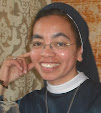
 Sr. Angela berumur 77 tahun, berasal dari Austria dan sudah menjadi warga Negara Brasil.
Berkarya di Brasil 26 tahun, di Roma 6 tahun dan sejak tahun 1989 mulai di Portugal.
Penghargaan kepada SSpS di Portugal

Medal emas kepdada kongregasi dan prata kepada Sr. Angela Furian.

Ir. Angela Furian, SSpS

Hari ini di Belanda merayakan hari beatifikasi dari Madre Josefa, dan itu adalah suatu kegembiraan bagi kami suster suster Abdi Roh Kudus yang berkarya di seluruh dunia, namun mulai dari hari ini Madre Josefa adalah milik Gereja sejagat.
Di Portugal, dari pemerintah Lokal setempat memberi penghargaan kepada para suster dua medal antara lain;
Medal pertama adalah prata yang memberikannya kepada privadi Sr. Angela, medal yang kedua adalah emas/ouro yang memberikan kepada kongregasi SSpS yang berkarya di Portugal.
Sr. Angela dari Austria, dan 26 tahun berkarya di Brasil, 6 tahun sebagai Muther rumah di Roma generalato, dan sejak tahun 1989 mulai di Portugal.
Kerja dengan orang orang kecil yang dikucilkan dari sociedade setempat.
Hari ini adalah hari yang patut di syukuri atas rahmaat dan kesetian Tuhan dalam hidup dan karya SSpS.
Salam buatmu semua.
quinta-feira, 17 de abril de 2008
SVD of Slovak Province

Fr.Pavel Kobliha, SVD, JPIC Coordinator
For many centuries the area of today’s Slovak Republic was centre of interests of many nations. Romans, Germans, Turks and Hungarians. All of them wanted to conquer the territory between the Danube and High Tatras and settle there. But none of them were able to subjugate Slavs and stay here forever. But right because of these interests Slovakia is influenced by many nations now and they take part in Slovak citizenship. The biggest minority group, with about 10% of inhabitants, is Hungarian minority. They inhabit mostly the southern part of Slovakia, along the boarder with Hungary. The fact is that they have their own political party, which is widely supported also by non-Hungarians, and has its place in coalition. However, in real life, there are different relations between Hungarian and non-Hungarian people. In minds of Slovaks is deeply engraved, that we had to live under pressure of Hungarian reign for many years. And so people behave. Though, when one gets any closer contact with them, he realizes that they are like other normal people. What a surprise!
Ethnic groups:With our EU entrance is joined the discussion about some racial problems with gipsy ethnic group. Actual problem is illegal interruptions of young gipsy girls. However is the truth, everybody knows how these people live, in what conditions. We know it, and people from abroad know it as well. But they believe this is because of big discrimination and generally bad social conditions for ethnic groups in Slovakia. I think, maybe as most Slovaks that they caused it themselves. They have this way of life simply in their blood. So, the fact is that every employer rather employs a guy with a good social hinterland, and whom he can trust. So then the bigger half of gypsies does not have any job. It means no nice income, what reflects in bad home and social hinterland. This is a very simple view, but we can call it vicious circle. Anyway, there live many other minorities in Slovakia. For example Czechs, Germans, many other Slavs tribes, like Croatians, Slovenians, Russians, Ukraine’s, and polish people and so on. The newest minority which is rising are people from East Asia. We can see “Chinese” shops on every corner.
Racism is not widespread in Slovakia. The fact is that over centuries, the inhabitants lived an isolated existence and were not used to meet people of other races, except for Roma (Gypsies). Slovakia has never had colonies so that people from Africa and other continents apart from Europe were practically never seen here until well into the 20th century. Their lifestyles and social institutions, including slavery, were totally unknown to people here.
The Roma people (as Slovak Gypsies prefer to be called), form a relatively important minority group in Slovakia. Their problem is a very high unemployment rate, reaching 100% in some settlements. This is the main cause of their low living standards, which in turn bring about high crime rate and misuse of social resources. As a result a gulf developed between them and the majority population. However, racist physical attacks are few and far between.
The number of foreigners of different skin coloring increased during the past years mostly due to students from African and Asian countries. Many of them have learned the Slovak language, married local people and happily raising families. They have very nicely integrated into the society.
When shopping in open-air markets, you will see many vendors of bargain-price Asian clothes and electronics. almost exclusively they have some from Vietnam. They can speak little more than a few phrases in Slovak, other than the prices of their goods, but many people like to do business with them, because their goods are cheaper than similar articles in regular shops.
The Vatican championed the rights of gypsies, admitting its own past prejudices and calling on governments to improve the shunned nomads' lot. Presenting a new document on gypsies, Cardinal Stephen Fumio Hamao said while they had a right to their identity as a traveling people, they frequently met with "indifference or opposition“.
The report - Guidelines for the Pastoral Care of Gypsies - said gypsies were a people "abandoned by men but not by God" and outlined the "special pastoral approach" that the Catholic Church intended to adopt to help them
Key objectives were education and professional training for the population, as well as equal rights for men and women, it said .
"Of course they, too, have duties" towards the society in which they live, Cardinal Fumio Hamao said.
In this connection, the guidelines referred to the need to encourage "honesty and righteousness" in those who lived on the fringes of the law, helping them to abandon drug trafficking, theft and other routes to "easy money“.
War and terrorism in Slovakia /Muslim threats?
So far, touch wood, there were no terrorist attacks in Slovakia. Because Slovakia is a very small player on the international scene and there are no cities with over half a million inhabitants, the risk is not as high as in some other countries and cities. (For instance: the Czech Republic). Nevertheless the threat of terrorism is taken seriously and all necessary preventive measures are in place.
Social Ministry with the drug and alcohol addicted:
Following the rehab program, it is used to restore the former addict's ability to focus on real life goals and to return a level of self-control to the individual. This greatly improves the former addicts' ability to face the realities of life and reduce the need for drugs to escape the difficulties of life. Often, an addict commits harmful acts, both to themselves and their loved ones that traps them into further drug use.
Our “Novy Svet” rehab campus, in which Br. Maros Butala, (svd supervisor) works, is a comfortable house aimed at healing and appropriate for all ages. The addicts are treated with respect and are allowed to be themselves. Fr.Pavel is a spiritual director of these addicts. Br.Maros is a supervisor and Mr. Ladislav Nemeth is in charge of all rehabilitation centre. Of course there is a whole team of people working with them. A group of at least two people are necessary to provide the weight to break through the denial of the addicted person. An especially effective member of the confronting group is the employer or supervisor.
SSpS Slovak Province

Sr. Yuvensia Daso, SSpS
In the last few years the SSpS in Slovakia have started and are developing some new projects.
1. Working with the Roma Children (Gypsies)
We are developing our apostolate among the Roma people who make up approximately 5 % of Slovak population. One of the groups most affected by the current social and economic situation is the Roma minority. This group has the highest unemployment and the least chance of finding a job, along with low level of education and nearly no possibilities for re- qualification. Roma people are one of our priorities. Our Sisters work with Roma people esp. children in almost all of communities in Slovakia and in the Czech Republic. We started a special project with Roma‘s children in Nitra - Orechov Dvor.
In year 2005 we were asked by the vice mayor of Nitra to start apostolate with people who were not able to pay the rent for their houses and ended on the street. The vice mayor of Nitra wanted to help them and so they built for them outside the city 2nd class flats in Orechov Dvor. They saw that the people esp. their children need help and that they need somebody who has time for them. At that time an international junior sisters group who prepared themselves for final vows in Ivanka pri Nitre was asked by the PLT to start this apostolate. In Orechov Dvor live presently 250 people. Our sisters offer their help to those children by helping them with their homework, by playing and singing with them, drawing, painting and so on. The Tertians visited the children in 2005 once a week but since 2 years Sr. Pia Michalicova and Sr. Katerzyna Niezgoda go every day from 1 .pm to 5 .pm to them. Bishop Viliam Judak of Nitra is ready to help us and came already few times to visit the place. Since the beginning of this year one Salvatorian-Father comes twice a week to give the catechesis and prepare the people to receive sacraments. Most of the Roma people are Catholics and are proud to be Catholics. They love Mary very much and take refuge to her. Since 2 months also the students from the University of Nitra come twice a week to work together with our sisters. The main problem is the isolation of the people in this place and a very poor infrastructure Our Sisters share one room with the Kindergarten which uses it in the morning and they use it in the afternoon. We initiated the project to get there portable structures in which the people can meet and which can serve as social centre. The city of Nitra got already the structure and they should be put there this year. We feel that our apostolate with Roma people is a real priority here and now. In our last Provincial chapter in November 2007 we discussed this issue at length and decided to collaborate in this apostolate with the Roma Cathedra of the University in Nitra. In the meantime we prepared the contract about the collaboration between the City Nitra, the University of Nitra and our Congregation. The contract will be signed this year. It is not easy to carry out this ministry but we are glad that we are doing it. We try to introduce to these children spiritual values, which can bring them much more happiness than merely physical pleasures. They can see and experience that God is able to bring them many good things and they can put their trust in God.
2. Working with women.
Working with women and for women has been practiced by the community of the provincial house for more than 10 years in Women prison in Nitra. The sisters go there every Sunday for visiting, preparing the Holy Mass, and teaching catechism. They do this ministry in collaboration with the prison chaplain. In February this year at the meeting with Bishop R8bek, the prison chaplain and the directress of the prison we evaluated this apostolate. We saw the need to have more time for catechesis. We see also very important the collaboration not only with the prison chaplain but also with the psychologist of that place. The prison in Nitra is the only one women prison in Slovakia.
The Novitiate in Nitra assists to abandoned mothers with their children in collaboration with the city Nitra.
In the Czech Republic our sisters work with abandoned women in the Christian charity. Women who are there are mostly refugees. They openly share their life experiences with the sisters. Our sisters also look after their children when their mothers go to work.
One of our sisters works together with an MSC father and psychologist, helping sexually abused women.
Another sister works with AA in Pereš nearby Nitra and the community in Ivanka pri Nitre is ready to welcome those people so that they can share their experiences about the change in their lives.
We are happy that since 10 years also these areas remain not only not taboo but the needed help can be given to the people.
3. Mass Media
In this field we try to keep alive our history esp. from the communist time. Sr. Ivica Kúšiková is presently working on a project called Witnesses of Faith in which religious women from different congregations are telling stories from the communist regime. We feel responsible to pass on the truth to the next generations. A documentary film with that topic was made about the Slovakian province two years ago.
These are the main areas in which we are developing our social and cultural and spiritual work as a part of our JPIC program. There are many other smaller fields in which we work in the frame of JPIC.
1. Working with the Roma Children (Gypsies)
We are developing our apostolate among the Roma people who make up approximately 5 % of Slovak population. One of the groups most affected by the current social and economic situation is the Roma minority. This group has the highest unemployment and the least chance of finding a job, along with low level of education and nearly no possibilities for re- qualification. Roma people are one of our priorities. Our Sisters work with Roma people esp. children in almost all of communities in Slovakia and in the Czech Republic. We started a special project with Roma‘s children in Nitra - Orechov Dvor.
In year 2005 we were asked by the vice mayor of Nitra to start apostolate with people who were not able to pay the rent for their houses and ended on the street. The vice mayor of Nitra wanted to help them and so they built for them outside the city 2nd class flats in Orechov Dvor. They saw that the people esp. their children need help and that they need somebody who has time for them. At that time an international junior sisters group who prepared themselves for final vows in Ivanka pri Nitre was asked by the PLT to start this apostolate. In Orechov Dvor live presently 250 people. Our sisters offer their help to those children by helping them with their homework, by playing and singing with them, drawing, painting and so on. The Tertians visited the children in 2005 once a week but since 2 years Sr. Pia Michalicova and Sr. Katerzyna Niezgoda go every day from 1 .pm to 5 .pm to them. Bishop Viliam Judak of Nitra is ready to help us and came already few times to visit the place. Since the beginning of this year one Salvatorian-Father comes twice a week to give the catechesis and prepare the people to receive sacraments. Most of the Roma people are Catholics and are proud to be Catholics. They love Mary very much and take refuge to her. Since 2 months also the students from the University of Nitra come twice a week to work together with our sisters. The main problem is the isolation of the people in this place and a very poor infrastructure Our Sisters share one room with the Kindergarten which uses it in the morning and they use it in the afternoon. We initiated the project to get there portable structures in which the people can meet and which can serve as social centre. The city of Nitra got already the structure and they should be put there this year. We feel that our apostolate with Roma people is a real priority here and now. In our last Provincial chapter in November 2007 we discussed this issue at length and decided to collaborate in this apostolate with the Roma Cathedra of the University in Nitra. In the meantime we prepared the contract about the collaboration between the City Nitra, the University of Nitra and our Congregation. The contract will be signed this year. It is not easy to carry out this ministry but we are glad that we are doing it. We try to introduce to these children spiritual values, which can bring them much more happiness than merely physical pleasures. They can see and experience that God is able to bring them many good things and they can put their trust in God.
2. Working with women.
Working with women and for women has been practiced by the community of the provincial house for more than 10 years in Women prison in Nitra. The sisters go there every Sunday for visiting, preparing the Holy Mass, and teaching catechism. They do this ministry in collaboration with the prison chaplain. In February this year at the meeting with Bishop R8bek, the prison chaplain and the directress of the prison we evaluated this apostolate. We saw the need to have more time for catechesis. We see also very important the collaboration not only with the prison chaplain but also with the psychologist of that place. The prison in Nitra is the only one women prison in Slovakia.
The Novitiate in Nitra assists to abandoned mothers with their children in collaboration with the city Nitra.
In the Czech Republic our sisters work with abandoned women in the Christian charity. Women who are there are mostly refugees. They openly share their life experiences with the sisters. Our sisters also look after their children when their mothers go to work.
One of our sisters works together with an MSC father and psychologist, helping sexually abused women.
Another sister works with AA in Pereš nearby Nitra and the community in Ivanka pri Nitre is ready to welcome those people so that they can share their experiences about the change in their lives.
We are happy that since 10 years also these areas remain not only not taboo but the needed help can be given to the people.
3. Mass Media
In this field we try to keep alive our history esp. from the communist time. Sr. Ivica Kúšiková is presently working on a project called Witnesses of Faith in which religious women from different congregations are telling stories from the communist regime. We feel responsible to pass on the truth to the next generations. A documentary film with that topic was made about the Slovakian province two years ago.
These are the main areas in which we are developing our social and cultural and spiritual work as a part of our JPIC program. There are many other smaller fields in which we work in the frame of JPIC.
Subscrever:
Mensagens (Atom)